NewsJuly 21, 20264 Minutes
The Legendary Litoranea
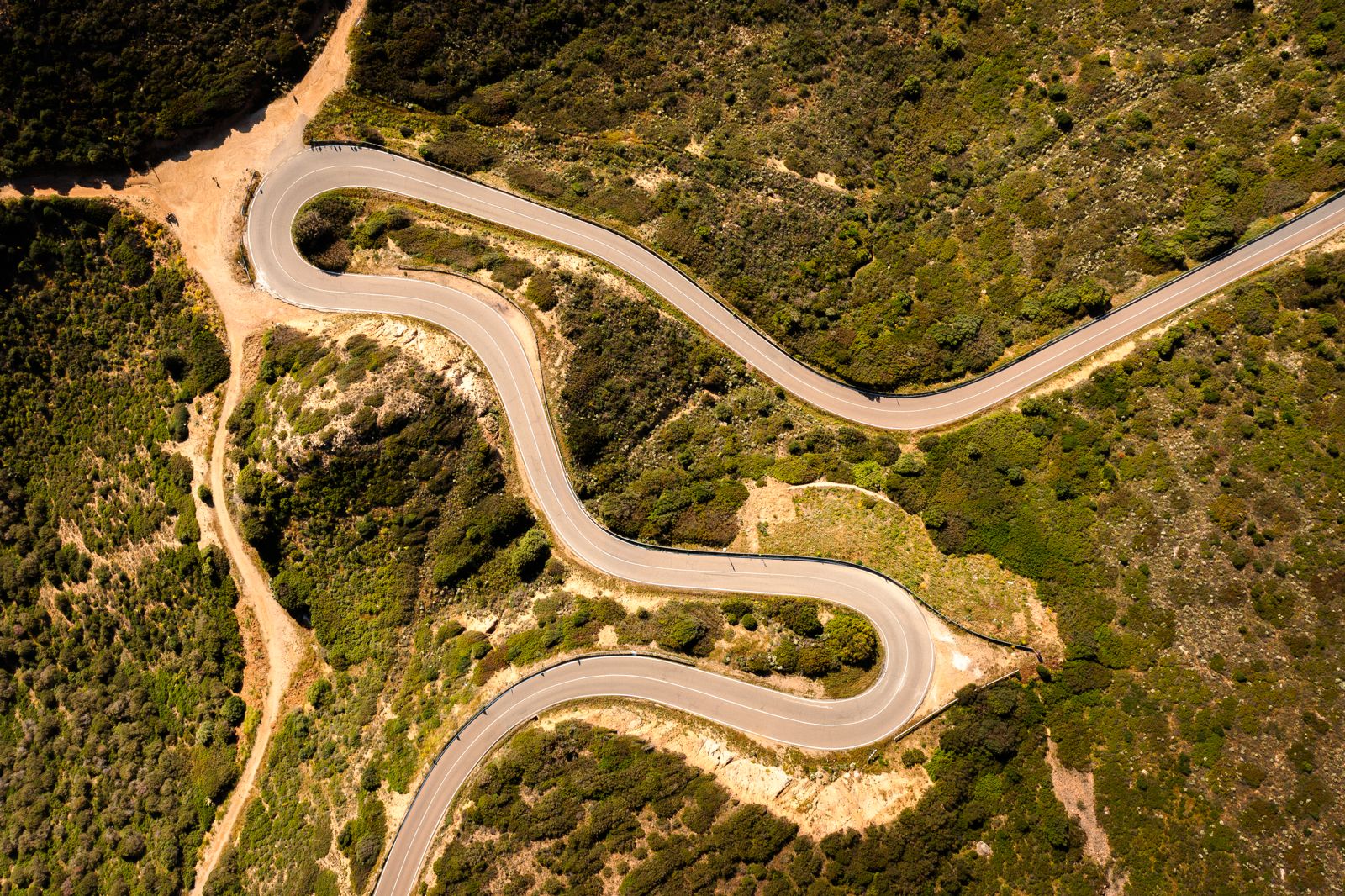
The Litoranea is one of the island’s most spectacular roads. For Torre delle Stelle, it is also the route that links it to Cagliari, to the west, and Villasimius, to the east, following the south-eastern coast of Sardinia along the eastern edge of the Golfo degli Angeli. Much of what Torre delle Stelle is today, its accessibility, even its life as a village, depends on this road. Yet its charm lies in the way it blends into the landscape. It does not seem imposed on the coast. It follows it, yielding to it, bending with the hills and opening, turn after turn, to the sea.
To experience it by motorcycle is also to breathe in an atmosphere that carries the past. Along this route, the landscape preserves traces of earlier times, which the road seems to invite the traveller to rediscover.
For centuries, this stretch of southern Sardinia was difficult to cross. Connections relied on inland paths and mule tracks, while the coast was observed more often than travelled. The towers of Su Fenugu, from 1578, and Capo Boi, from 1585, recall a time of lookouts and signal fires. Before becoming a destination, this landscape was a frontier.
Change came in the twentieth century. Between the 1950s and 60s, the south-east opened to coastal tourism and the Litoranea became the road of its discovery. Torre delle Stelle was born at that time, stretching across a promontory between two bays, close to Cagliari, yet set apart.
Today, the Litoranea lends itself to a slower journey. Leaving the city behind, it opens towards Terra Mala, then Cala Regina and Mari Pintau, “Painted Sea” in the Sardinian language, where the water shifts from turquoise to emerald green. Geremeas and Baccu Mandara follow, with wide beaches and a more open coastline.
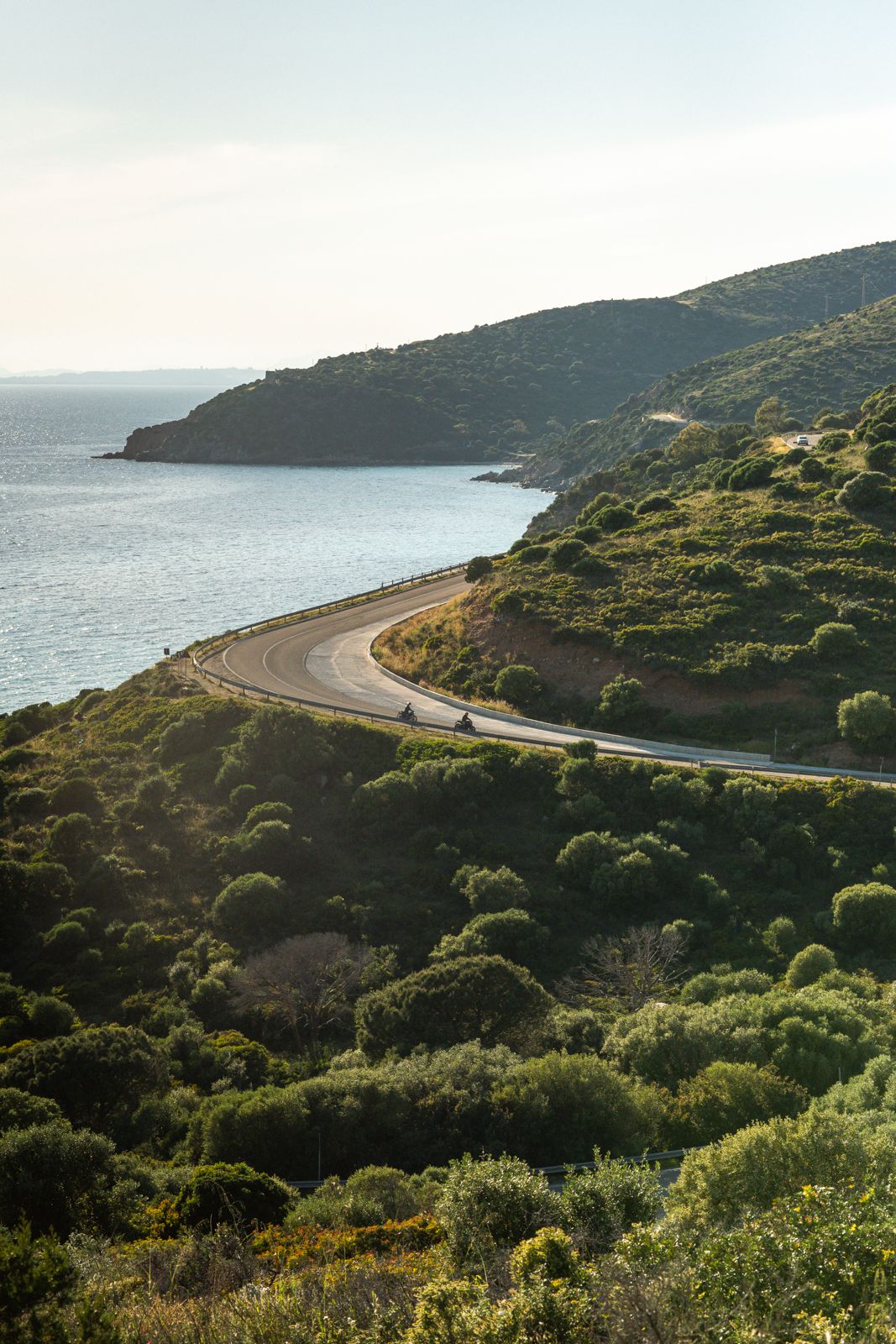
Then, between Torre delle Stelle and Solanas, the road offers one of its most poetic vistas. Between the bends, a hillside opens and Torre reveals itself almost all at once. By day it looks like a postcard, stretched between rock and sea. By night, its lights seem to continue the starry sky from which it takes its name. It is the kind of view that belongs especially to those travelling on two wheels. What makes this stretch legendary is not only its beauty, but the fact that the road itself has become part of the destination.
Beyond, Solanas, Capo Boi and Porto Sa Ruxi continue the journey with broad beaches, coastal towers, junipers, dunes and a sea that changes colour throughout the day. That is why the Litoranea retains something unique. It reveals the coast, one curve at a time, and is best appreciated slowly, with salt in the air and the sea always beside you.
This coastal route, from Cagliari to Villasimius, is regarded by many as one of the island’s most beautiful scenic roads, closely tied in the imagination to crystal-clear water, Mediterranean flora and a sequence of beaches that gives the journey its own identity. It has become an iconic road for travelling by motorcycle, by car, and even by bicycle, marked by panoramic viewpoints and natural stopping places that invite you to slow down. Not by chance, in 2017 it was also part of the Giro d’Italia.
From this comes its legendary character: one of those rare roads that remain in the memory not only for where they lead, but for the way they are travelled.