NewsJuly 31, 20264 Minutes
Exploring Cagliari
From Torre delle Stelle, Cagliari is not simply a nearby destination. It is where the landscape of the south comes together to become a city. To the west, beyond the coast and the expansive gulf, it appears as a city of stone and light, built on heights that face the sea and on centuries that still inhabit its streets. Around 45 kilometres away, Cagliari does not interrupt the story of the territory. It deepens it.
It reveals itself gradually. Terraces, stairways, bastions and quarters rise one above another over the Golfo degli Angeli. It is a city built on seven hills: Castello, Tuvumannu, Tuvixeddu, Monte Claro, Monte Urpinu, Bonaria and San Michele. In that vertical geography, its character is already clear. Cagliari is not spread out, but lifted, exposed, panoramic, always turning stone toward the horizon.
Its history is ancient and layered. Founded by the Phoenicians, shaped in turn by Carthaginians, Romans, Vandals and Byzantines, it was also capital of the Judicate of Càlari before the Pisans, and later the Aragonese, the Spanish and the Piedmontese. It is not a city of one single origin, but of many, which is why it remains both complex and multifaceted.
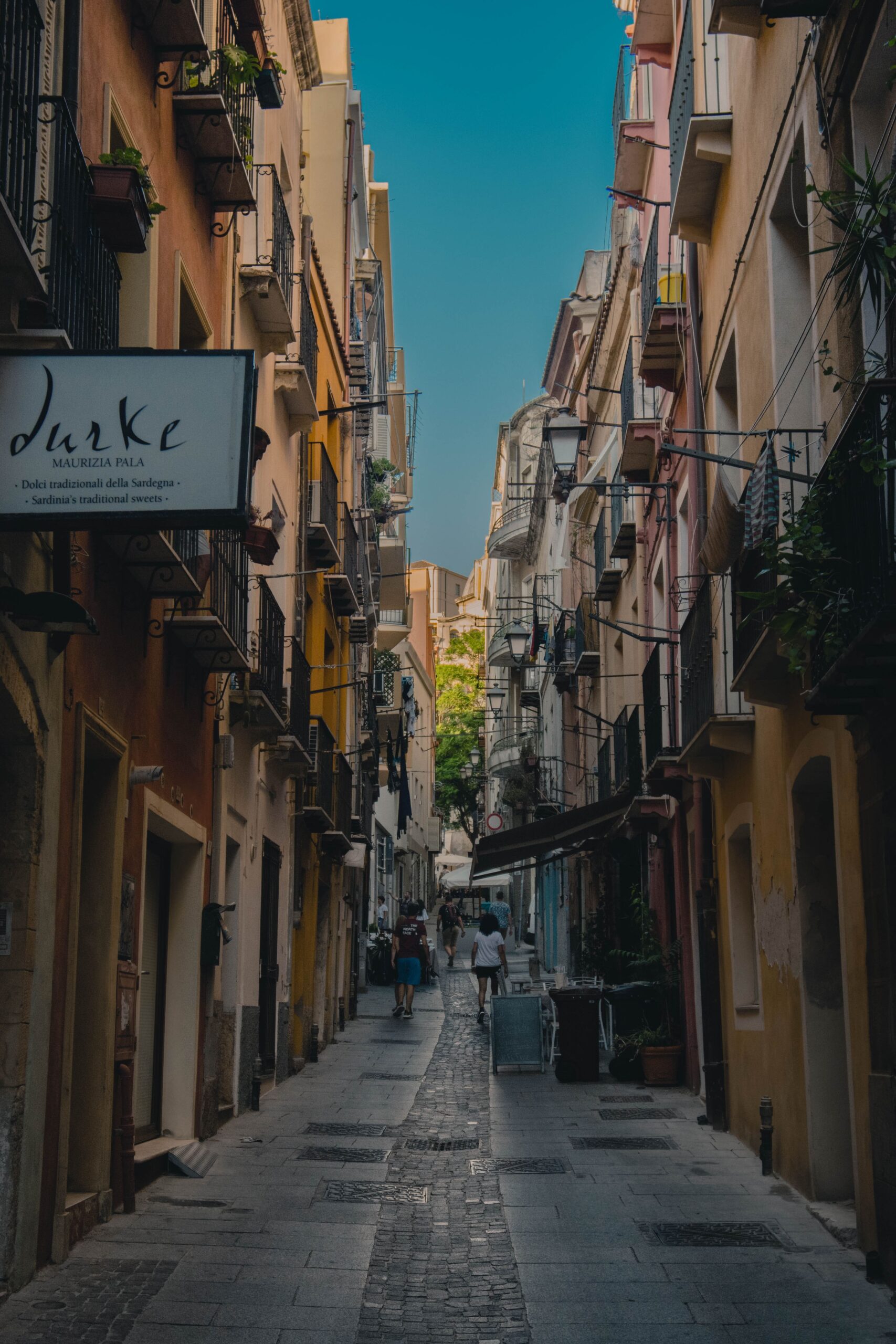
The highest heart of this story is Castello. Founded by the Pisans in the thirteenth century and fortified with walls, towers and bastions, it was once the seat of civil, military and religious power. Its narrow lanes, pale stone, arches and sudden openings over rooftops and the port give a walk a suspended quality. Here you don’t simply stroll, you enter the historical form of the city. The Cathedral of Santa Maria, also of Pisan origin, still gathers that long continuity within its walls.
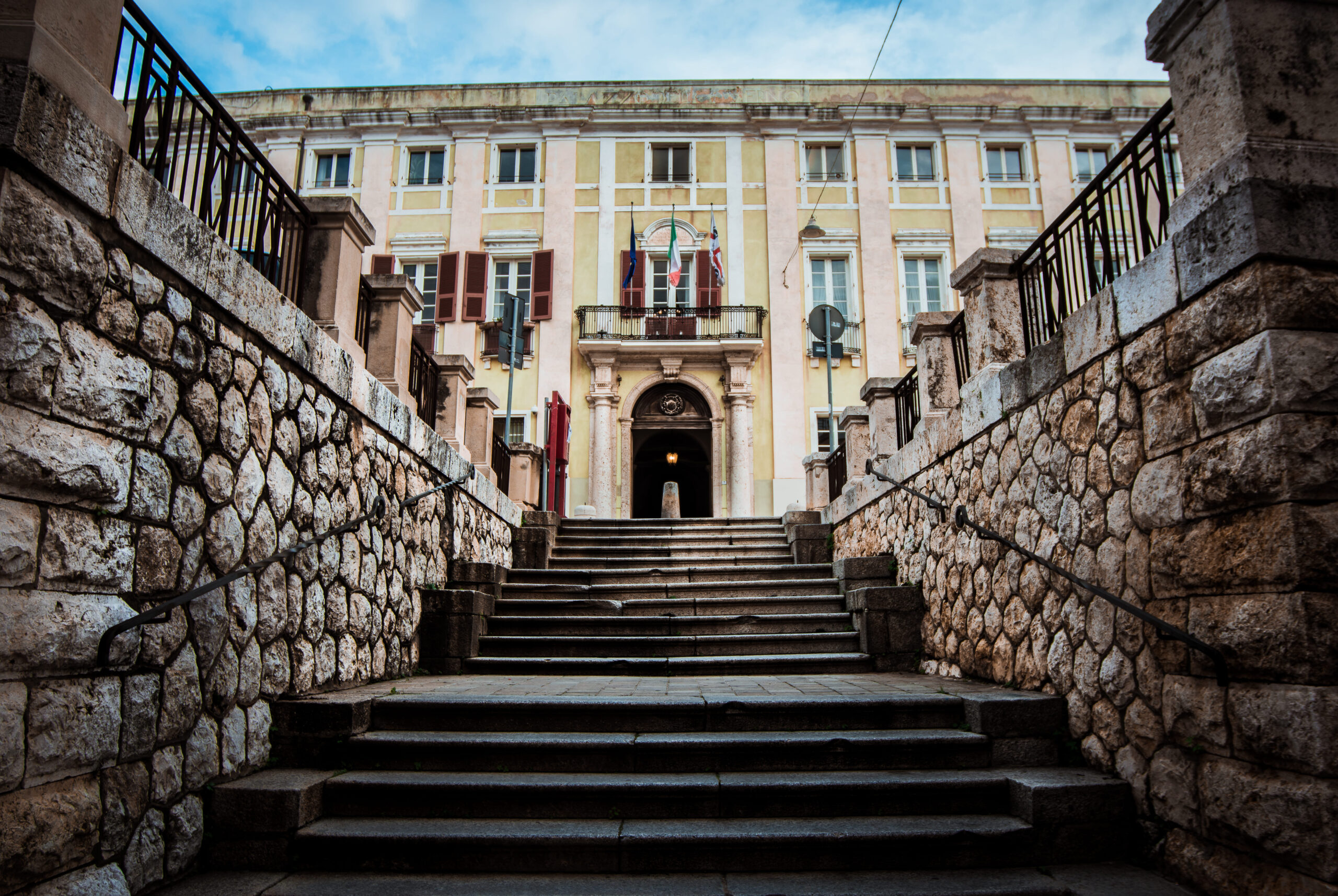
Below, the Bastione di Saint Remy marks the clearest threshold between the old city and the Cagliari that opens toward the sea. From its terrace, domes, façades, Via Roma, the port and the gulf fall into place. It is not only a viewpoint, but a way of understanding the city.
Yet Cagliari also lives in its markets, voices and everyday rhythm. The Mercato di San Benedetto perhaps tells its story better than any monument: fish stalls, seasonal produce, colours, bargaining, daily life. Then there is Poetto, seven kilometres of beach from the Sella del Diavolo toward Quartu, once known for salt extraction and later claimed by bathing, sailing, promenades and long evenings by the sea. Few cities hold urban life and coastal freedom together so naturally.
Monte Urpinu, Monte Claro, Bonaria, the Sella del Diavolo and Molentargius remind us that nature remains part of the city’s structure. The Cittadella dei Musei and the Museo Archeologico Nazionale add further depth, with over four thousand objects telling nearly seven thousand years of history. By evening, Marina changes tone again with outdoor tables, lights and social life. That is what makes Cagliari essential from Torre delle Stelle. It is not a diversion, but the urban heart of the very same landscape.